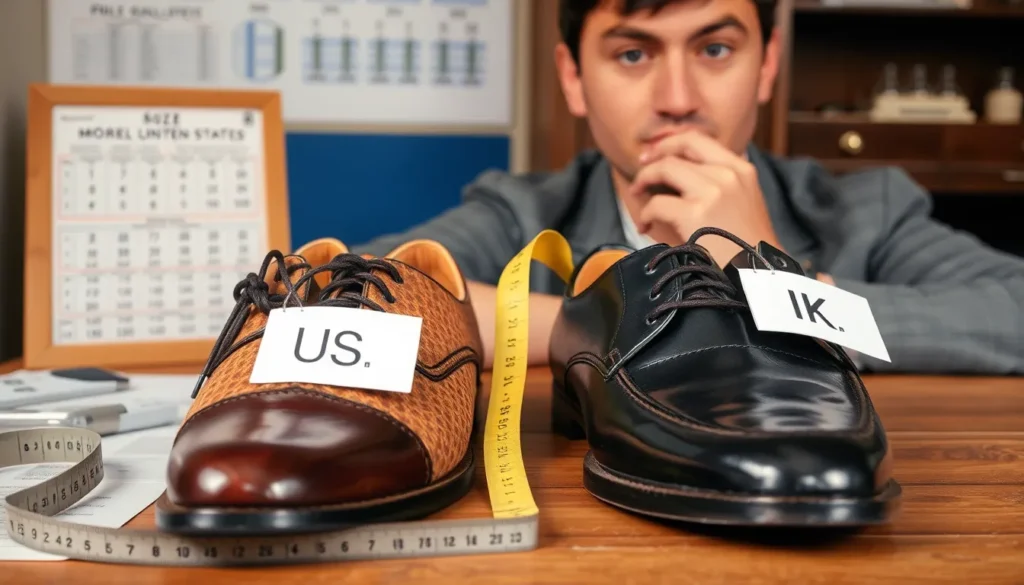
Navigating the world of shoe sizes can feel like trying to solve a Rubik’s cube blindfolded. With the US and UK systems throwing curveballs at every turn, it’s easy to end up with a pair of shoes that could double as boats. But fear not, shoe shoppers! Understanding the difference between US and UK shoe sizes is simpler than it seems.
Understanding US To UK Shoe Size Conversion
Converting shoe sizes from the US to the UK involves specific numerical differences. Typically, US shoe sizes are one size larger than UK sizes. For instance, a US men’s size 10 corresponds to a UK men’s size 9.
Women’s sizes also differ, with a notable shift between the US and UK systems. A US women’s size 8 equals a UK women’s size 6. Understanding this difference is crucial for accurate fitting when purchasing shoes internationally.
It’s essential to factor in width and style variations. Shoe width may affect fit, and different brands may size their shoes differently. Therefore, checking size charts provided by manufacturers proves beneficial.
Using a reliable conversion chart simplifies the process. A conversion chart typically lists each US size alongside its UK equivalent, making it easy to compare. Below is a basic conversion table for reference:
| US Men’s Size | UK Men’s Size | US Women’s Size | UK Women’s Size |
|---|---|---|---|
| 7 | 6 | 6 | 4 |
| 8 | 7 | 7 | 5 |
| 9 | 8 | 8 | 6 |
| 10 | 9 | 9 | 7 |
| 11 | 10 | 10 | 8 |
Consulting this chart aids in determining the right size when ordering shoes online. Shopping for shoes from overseas becomes easier by knowing your US size and the corresponding UK size. Always consider trying on shoes, if possible, to ensure the perfect fit.
Why Shoe Size Matters


Shoe size plays a crucial role in comfort and performance. Finding the right fit prevents issues like blisters, calluses, and foot pain. Comfort contributes to better posture and overall well-being.
The Importance Of Correct Fit
Correct fit significantly impacts day-to-day activities. Shoes that fit well provide better support and reduce the risk of injury. Properly sized shoes enhance performance during workouts or sports. They improve stability, allowing for focused movement. It’s essential to measure both length and width for a complete fit. The right fit promotes confidence, whether walking or running. Without it, even the most stylish shoes can cause discomfort and hinder mobility.
Common Sizing Mistakes
Many people make common sizing mistakes when selecting shoes. One common error involves assuming that all brands have the same sizing standards. Different manufacturers can differ significantly, even within the same size category. Another mistake includes not accounting for foot swelling throughout the day. Feet often expand, making it necessary to try shoes on later in the day for accuracy. Relying solely on online guides can lead to misjudgments about fit. Attempting to convert sizes without understanding the nuances can also create confusion. Avoiding these pitfalls ensures a more enjoyable shopping experience and a better fit overall.
How To Measure Your Foot Size
Measuring foot size accurately ensures finding the right shoe. Using the right tools and following a methodical approach simplifies this process.
Tools Needed For Accurate Measurement
Gather a few essential items to take precise measurements. A ruler or measuring tape provides accurate length readings. A piece of paper helps outline the foot’s shape. A pen is necessary for marking measurements. A flat surface allows for optimal positioning. These basic tools create a straightforward measuring environment.
Step-By-Step Measuring Guide
Begin by placing the piece of paper on a flat surface. Stand on the paper with heel against the wall. Trace around the foot carefully, keeping the pen as close to the foot as possible. Measure the length from the heel to the longest toe using a ruler or measuring tape. Record the measurement in inches or centimeters. Repeat the process for the other foot, as sizes may vary. Then consult a size chart to determine the appropriate US and UK shoe sizes based on the measurements.
US To UK Shoe Size Chart
Understanding shoe sizes helps navigate the differences between US and UK systems. A reliable chart simplifies this task by showing conversions.
Women’s Shoe Size Comparison
Women’s shoe sizes differ between the US and UK. A common conversion indicates that a US women’s size is typically one size larger than its UK counterpart. For example, a US size 8 corresponds to a UK size 6. It’s important to note that brands may vary slightly in their sizing. Trying on shoes from different retailers may yield unexpected results even within the same size category.
Men’s Shoe Size Comparison
Men’s shoe sizes from the US also contrast with UK sizes. Generally, a US men’s size is one size larger than the UK size. For instance, a US size 10 aligns with a UK size 9. Variations in fit may occur due to brand differences, so awareness of specific sizing standards helps. Consulting a conversion chart before purchasing provides clarity and aids in selecting the correct size.
Tips For Buying Shoes Online
When buying shoes online, knowing your size in both US and UK formats helps avoid confusion. Always check the size chart provided by the retailer, as sizing can vary significantly between brands. Consider measuring your feet before making a purchase; use a ruler or measuring tape for accuracy. Measure both length and width, as foot dimensions affect fit.
Reading customer reviews offers insights into sizing accuracy. Many shoppers share if shoes run big, small, or true to size. Pay attention to comments regarding width; this detail often influences comfort. Try to identify any consistency in feedback about fit, as this provides a better understanding of how shoes might fit your feet.
Understanding return policies is essential. Some brands offer free returns, allowing for easy exchanges if the size doesn’t fit. Always keep packaging intact, as returning shoes can sometimes depend on their condition. Save shipping materials in case the shoes need to go back.
Remember that different styles may fit differently. Sneakers might have a looser fit, while boots can feel snug around the ankle. Opt for styles similar to those previously worn, as familiarity with fit increases the chance of selecting the right shoe.
Finally, consider your plans for the shoes. If they’re for everyday wear, comfort remains a priority. For special occasions, style may take precedence over a perfect fit. Balancing both aspects increases satisfaction with the purchase, ensuring the shoes meet expectations when they arrive.